

Gluten-Free Apple Pecan Cheesecake
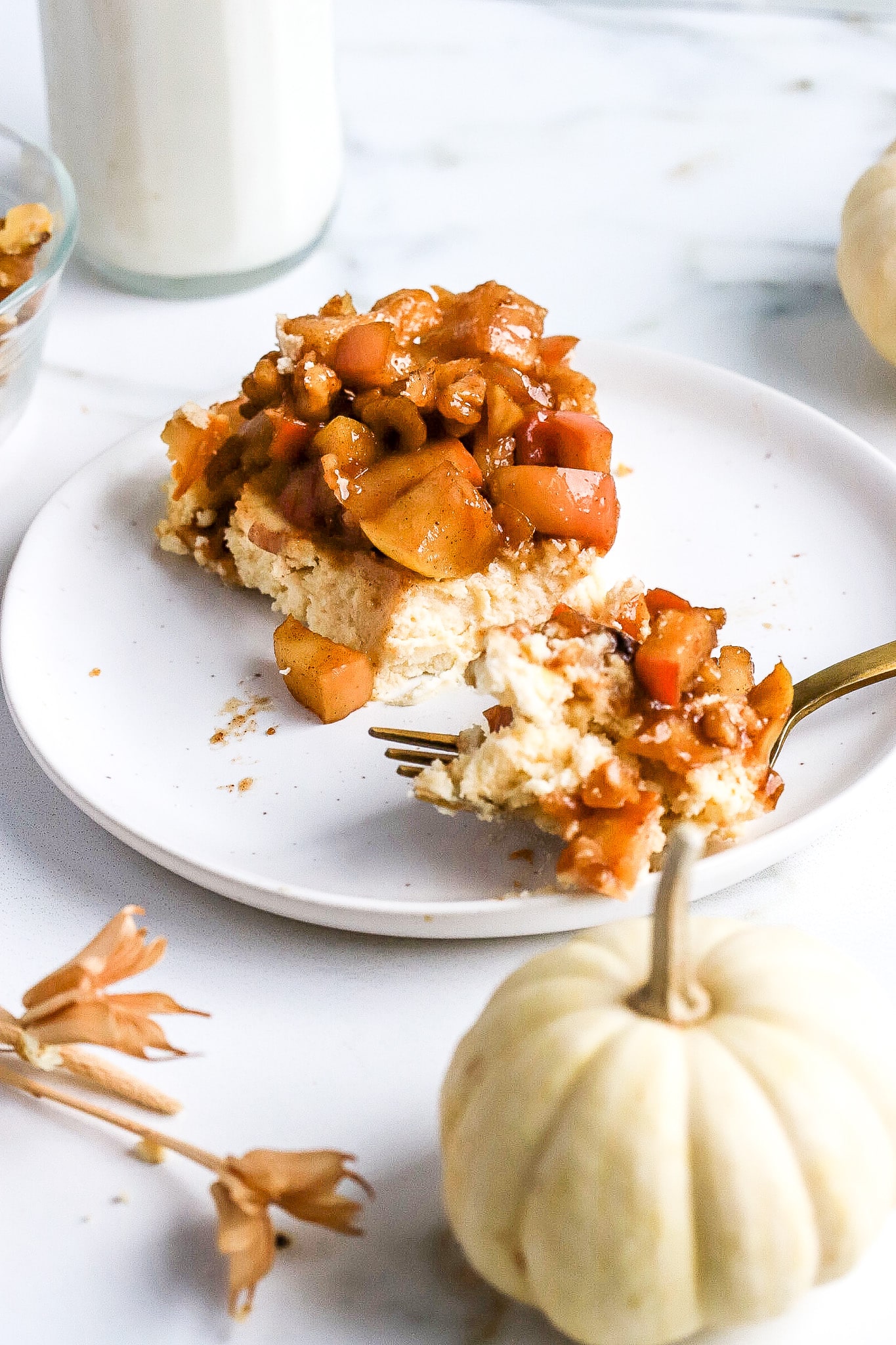
A gluten-free apple pecan cheesecake with a graham cracker crust, a Greek yogurt filling baked in a water bath so it doesn’t crack, and sautéed cinnamon apples with toasted pecans piled on top.

I made this three times before I stopped fighting the water bath, and the third one came out without a single crack.
Apple pecan cheesecake is a baked cheesecake topped with apples cooked down in butter, brown sugar, and cinnamon, with pecans stirred through. This version uses a gluten-free graham cracker crust and Greek yogurt in the filling, bakes in a 9-inch springform pan, and serves 12.
It takes about five and a half hours start to finish, and most of that is the cheesecake sitting still. Twenty minutes of actual work, then the oven and the fridge do everything else.
The topping goes on cold, right before serving. That’s what keeps the apples from weeping into the cheesecake overnight and turning the surface soggy.

What You Need
Amounts are in the recipe card. Three components, and each one has a part that matters.
For the crust
Gluten-free graham cracker crumbs. One cup. Schär and Kinnikinnick both make GF grahams that crush well. If you can’t find them, GF digestive biscuits or even gingersnaps work, and gingersnaps are very good with apple.
Worth knowing that gluten free grahams behave differently from wheat ones. They’re drier and they crumble finer, so the crust can end up sandy rather than solid. If yours looks loose after mixing, add another tablespoon of melted butter rather than pressing harder. Pressing harder compacts it into a layer you can’t get a fork through, which is the opposite problem and much more annoying at the table.
Butter. Melted, and it’s the binder. Too little and the crust falls apart under the knife, too much and it goes greasy and hard.
Sugar and a pinch of salt. The salt matters more than it sounds like it does in a crust this sweet.
For the filling
Cream cheese, at room temperature. Two full-fat blocks, and room temperature is not a suggestion. Cold cream cheese will not beat smooth, and every lump you leave in the bowl is a lump in the finished cheesecake. Take it out two hours ahead. This is the single most common reason a homemade cheesecake comes out grainy.
Greek yogurt. Plain, and this is what makes the texture. It adds tang and moisture without the extra fat of sour cream, and it keeps the filling from tasting flat and heavy the way an all-cream-cheese filling can.
Eggs. Two, added one at a time and beaten in just until combined. Overbeaten eggs whip air into the batter, that air expands in the oven, and then it collapses as the cheesecake cools. That’s a crack.
Sugar, vanilla, and salt.
For the apple pecan topping
Honeycrisp apples. Three. Firm and tart, so they hold their shape through cooking instead of collapsing into sauce. Granny Smith works too and is sharper. Avoid anything soft.
Butter and brown sugar, cooked together until bubbling before the apples go in. That’s what turns them glossy rather than watery.
Cinnamon and a dash of nutmeg.
Pecans. Half a cup, stirred in at the end so they stay crunchy rather than softening in the syrup.
How to Make It
The crust
- Heat the oven to 350°F. Mix the graham crumbs, melted butter, sugar, and salt until it looks like wet sand.
- Press firmly into a 9-inch springform pan, up the sides slightly. Use the flat bottom of a glass to compact it evenly.
- Bake 9 to 12 minutes, until it smells toasted. Cool while you make the filling.

The filling
- Beat the room-temperature cream cheese with the sugar until completely smooth, scraping the bowl twice. Stop when there are no lumps at all, and check by pressing some against the side of the bowl.
- Add the eggs one at a time, mixing only until each disappears.
- Stir in the Greek yogurt, vanilla, and salt by hand rather than with the mixer. You want it combined, not aerated.
- Pour over the cooled crust and tap the pan firmly on the counter a few times to bring air bubbles up.
- Drop the oven to 325°F, set the pan in a water bath with 1 to 2 inches of hot water, and bake 75 minutes. The edges should be set and lightly golden, with the middle still wobbling slightly.
- Turn the oven off and crack the door, leaving the cheesecake inside for 1 hour.
- Cool to room temperature, then chill at least 4 hours, overnight if you can.

The topping
- Melt the butter and brown sugar in a pan until bubbling.
- Add the sliced apples, cinnamon, and nutmeg and cook 7 to 9 minutes, stirring now and then, until the apples are tender but still holding their shape.
- Stir in the pecans and let the mixture cool.
- Pile onto the chilled cheesecake just before serving, run a knife around the edge, and release the springform.

Why This Uses a Water Bath
Almost every cheesecake recipe you’ll find skips this step, and then spends several paragraphs explaining why cheesecakes crack. Those two things are related.
A water bath does two jobs. It caps the temperature around the pan at boiling, so the outside can’t race ahead of the middle, and it fills the oven with steam, which keeps the surface from drying out and tightening. A dry surface over a still-expanding middle is exactly how a crack forms.
The result is a cheesecake that bakes evenly and comes out flat and pale gold instead of domed, browned at the edges, and split down the center.
The cost is that it’s more work, and it’s the reason a lot of recipes avoid it. You need a springform pan wrapped well enough that water can’t get in.
How to wrap it properly. Two layers of heavy-duty foil, pressed up the outside of the pan past the water line, with no seams below the top. Better still, set the whole springform inside a slightly larger cake pan and put that in the water. That’s the version I’d recommend, because foil tears and a leaked crust is unsalvageable.
If you want to skip it entirely, you can. Bake at 300°F for around 65 to 70 minutes instead, put a shallow pan of hot water on the rack below to get some steam in the oven, and follow the cooling steps below exactly. You’ll likely get a small crack, and the apple pecan topping covers it completely, which is the quiet advantage of a topped cheesecake over a plain one.
How to Stop a Cheesecake From Cracking
Cracks come from three things, and the water bath only fixes one of them.
Too much air in the batter. Beating the eggs hard whips air in, the air expands in the heat, and the structure tears when it collapses. Mix the eggs in slowly, one at a time, only until they disappear.
Cooling too fast. This is the big one. A cheesecake pulled from a hot oven into a cold kitchen contracts at the edges before the middle catches up, and it splits. That’s why step 9 leaves it in the switched-off oven with the door cracked for an hour. Do not skip it.
Baking too long. A cheesecake is done when the middle still wobbles like set jelly. It keeps cooking on residual heat after it comes out. If the center looks firm in the oven, it’s already overdone.
And if it cracks anyway, the apple pecan topping hides it entirely. Nobody has ever noticed a crack under a pile of cinnamon apples.
Knowing when it’s done
This is where most cheesecakes get ruined, and the honest answer is that it looks underbaked when it’s right.
At 75 minutes, the outer two inches should be set and barely golden, and the middle four inches or so should still move as one wobbly piece when you nudge the pan. Not liquid, not sloshing, but jiggling like set jelly. If the whole surface is firm and still, it’s overbaked and it will be dry.
A thermometer takes the guesswork out if you’d rather not judge by eye. The center should read around 150°F. Pull it there and the residual heat carries it the rest of the way while it cools in the switched-off oven.
Don’t open the oven door to check before the 60 minute mark.
Tips
Run a thin knife around the edge as soon as it comes out of the oven, before it cools. A cheesecake that sticks to the sides pulls against itself as it contracts, and that’s a crack you caused an hour after baking.
- Wipe the knife between slices with a hot cloth. Twelve clean slices instead of twelve smeared ones.
- Toast the pecans for two minutes in a dry pan before they go into the apples.
- Keep the topping off until serving. Warm or wet apples on a cold cheesecake will soften the surface.
- Bring slices out 20 minutes before serving. Fridge-cold cheesecake tastes muted, and the flavor opens up as it warms slightly.
A timeline if this is for a holiday
This recipe takes about six and a half hours from start to servable, and almost none of that is work. Trying to fit it into the morning of Thanksgiving is where people get stressed, so here’s how I’d break it up.
Two days ahead: make the cheesecake through the chilling step. Crust, filling, bake, cool in the oven, then into the fridge covered.
The day before, or the morning of: cook the apple pecan topping and refrigerate it separately. It takes ten minutes and it keeps fine.
An hour before serving: pile the topping on, run a knife around the edge, release the springform, and let it sit out while everyone finishes dinner.
Cheesecake is one of the few desserts that improves when it’s made ahead. The texture firms and the flavor settles, so two days out isn’t a compromise; it’s the better version.

Variations
- Caramel drizzle over the apples just before serving.
- Swap the pecans for walnuts, or use both.
- Gingersnap crust instead of graham. It’s sharper and it works with the apples.
Storing and Freezing
Fridge: Covered, up to 4 to 5 days. Store the topping separately if you can, and add it per slice.
Freezer: Up to 3 months. Freeze the plain cheesecake without the topping, wrapped tightly, and make the apples fresh when you thaw it. Apples don’t freeze well and the cheesecake does.
Thawing: Overnight in the fridge, never on the counter.

Gluten-Free Apple Pecan Cheesecake
Ingredients
GLUTEN-FREE CRUST
- 1 cup gluten-free graham cracker crumbs
- ¼ cup butter
- 1 ½ tbsp white sugar
- pinch of salt
CHEESECAKE FILLING
- 2 8 oz package cream cheese
- ⅔ cup white sugar
- 2 eggs
- ⅔ cup plain greek yogurt
- 2 tsp vanilla extract
- ½ tsp salt
APPLE PECAN TOPPING
- ¼ cup butter
- ¼ cup brown sugar
- 3 honey crisp apples
- 1 tsp cinnamon
- Dash of ground nutmeg
- ½ cup pecans
Instructions
- Make the Gluten-Free Crust: Preheat your oven to 350 degrees F. In a bowl, mix together the graham cracker crumbs, melted butter, sugar, and salt. Press the cheesecake crust mixture into the bottom of a 9-inch springform pan using your hands or a glass and bake for 9-12 minutes.
- Make the Cheesecake Filling: In a large bowl with a hand held mixer or in the bowl of a stand mixer with the paddle attachment, beat the cream cheese and sugar together until smooth. Add the eggs, one at a time, fully incorporating each before adding the next. Stir in the Greek yogurt, vanilla extract, and salt.
- Pour the filling over the crust in the springform pan. Smooth the top with a spatula and tap the pan on the counter numerous times to release any air bubbles.
- Reduce the oven temperature to 325 degrees F. Place a baking dish into the oven underneath the cheesecake and add hot water to create a water bath. Approximately 1-2 inches of water.
- Bake for 75 minutes, or until the center is just set and the edges are lightly golden. Turn off the oven, open the door slightly and keep it cracked open with a wooden spoon. Let the cheesecake cool inside for 1 hour to prevent cracks.
- Remove the cheesecake from the water bath and allow it to reach room temperature. Cover and let chill in the fridge for minimum 4 hours to overnight.
- Make the Apple Pecan Topping: Once creamy cheesecake filling has set, make the topping. In a medium pan over medium heat, melt the butter and brown sugar together until combined and bubbling slightly. Add the apples, cinnamon, and nutmeg, then cook for 7-9 minutes, stirring occasionally, until the apples are tender.
- Stir in the pecans until they’re well coated and evenly mixed. Pile the cinnamon-spiced apple pecan topping right on top of your creamy cheesecake layer.
- When you’re ready to serve, run a knife around the edge of the pan, then release and remove the springform. Slice, serve, and watch as everyone falls in love with this gluten-free delight!
Notes
Nutrition
The nutrition information provided is calculated based on industry-standard software and should be used as a general guide only. The information may vary depending on ingredient substitutions, cooking techniques, and individual serving sizes. It is the responsibility of the reader to ensure the accuracy and appropriateness of the nutritional information provided. Always consult a qualified healthcare provider for personalized medical or nutritional advice.
More Fall Desserts to Try
- Gluten-Free Strawberry Cheesecake
- Air Fryer Apple Crisp
- Gluten-Free Pumpkin Chocolate Chip Cookies
- Cookie Dough Cheesecake Bars
- Baked Apple Cinnamon Oatmeal Cups
If you make this, leave a star rating and tell me whether you did the water bath or skipped it. I want to know how the no-bath version holds up for people. Tag me @basicswithbails or save this before Thanksgiving planning starts.

About Bailey
I love to bake, cook, exercise, and document all of the above. Nutrition is not low fat. It is not low calorie. It’s not feeling deprived or being hungry all the time. It’s nourishing your body with real, whole foods so that you are consistently satisfied and energized to live your life to the fullest! Read more…


